Medicare Supplement
Enrollment Journey
Turned a fragmented, legacy enrollment process into a clear, carrier-aware guided journey — reducing cognitive load and enabling scalable, compliant digital enrollment across markets.
ROLE
Lead Designer
PARTNERS
Product, Engineering, Compliance, Research
PLATFORM
Desktop
Medicare Supplement
Enrollment Journey
Medicare Supplement
Enrollment Journey
Turned a fragmented, legacy enrollment process into a clear, carrier-aware guided journey — reducing cognitive load and enabling scalable, compliant digital enrollment across markets.
ROLE
Lead Designer
PLATFORM
Desktop
TEAM
Product, Engineering, Compliance, Marketing
ROLE
Lead Designer
TIMELINE
2025
PLATFORM
Desktop
PARTNERS
Product, Engineering, Compliance, Research
Medicare Supplement
Enrollment Journey
Turned a fragmented, legacy enrollment process into a clear, carrier-aware guided journey — reducing cognitive load and enabling scalable, compliant digital enrollment across markets
ROLE
Lead Designer
TIMELINE
2025
PLATFORM
Desktop
PLATFORM
Desktop
PLATFORM
Desktop
ROLE
Lead Designer
TIMELINE
2025
PLATFORM
Desktop
TEAM
Product, Engineering, Compliance, Research
Connect to Content
Add layers or components to swipe between.
Final Prototype
Final prototype
Final prototype
Connect to Content
Add layers or components to make infinite auto-playing slideshows.
Connect to Content
Add layers or components to make infinite auto-playing slideshows.
Connect to Content
Add layers or components to make infinite auto-playing slideshows.
Connect to Content
Add layers or components to make infinite auto-playing slideshows.
Connect to Content
Add layers or components to make infinite auto-playing slideshows.
Connect to Content
Add layers or components to make infinite auto-playing slideshows.
Connect to Content
Add layers or components to swipe between.
OVERVIEW
OVERVIEW
MY CONTRIBUTION
MY CONTRIBUTION
Discovery & workflow architecture
Carrier flow analysis & synthesis
Interaction & UX design
Content strategy collaboration
Usability testing & iteration
Hi-fi prototypes & dev handoff
Compliance alignment
Tools
Tools
Figma, Miro
ChatGPT, Napkin (process diagrams)
Hotjar, Usertesting
A rigid legacy system holding back a complex, high-stakes enrollment
A rigid legacy system holding back a complex, high-stakes enrollment
A rigid legacy system holding back a complex, high-stakes enrollment
Medicare Supplement enrollment is one of the most consequential financial decisions a user makes — yet the existing experience was built on Castro, a legacy system that couldn't flex to carrier-specific requirements or guide users with confidence.
As Senior Product Designer, I led the end-to-end redesign: from discovery and workflow architecture through interaction design and dev handoff. The new system, built on Muse v4, adapts dynamically to each carrier's rules while delivering a consistent, human-centered experience at every step.
Medicare Supplement enrollment is one of the most consequential financial decisions a user makes - yet the existing experience was built on Castro, a legacy system that couldn't flex to carrier-specific requirements or guide users with confidence.
As Senior Product Designer, I led the end-to-end redesign: from discovery and workflow architecture through interaction design and dev handoff. The new system, built on Muse v4, adapts dynamically to each carrier's rules while delivering a consistent, human-centered experience at every step.
Medicare Supplement enrollment is one of the most consequential financial decisions a user makes — yet the existing experience was built on Castro, a legacy system that couldn't flex to carrier-specific requirements or guide users with confidence.
As Senior Product Designer, I led the end-to-end redesign: from discovery and workflow architecture through interaction design and dev handoff. The new system, built on Muse v4, adapts dynamically to each carrier's rules while delivering a consistent, human-centered experience at every step.
OVERVIEW
PROBLEM
One rigid system.
Dozens of carriers. Zero flexibility.
One rigid system. Dozens of carriers. Zero flexibility.
The legacy enrollment experience couldn't keep up with the complexity of the Medicare Supplement market.
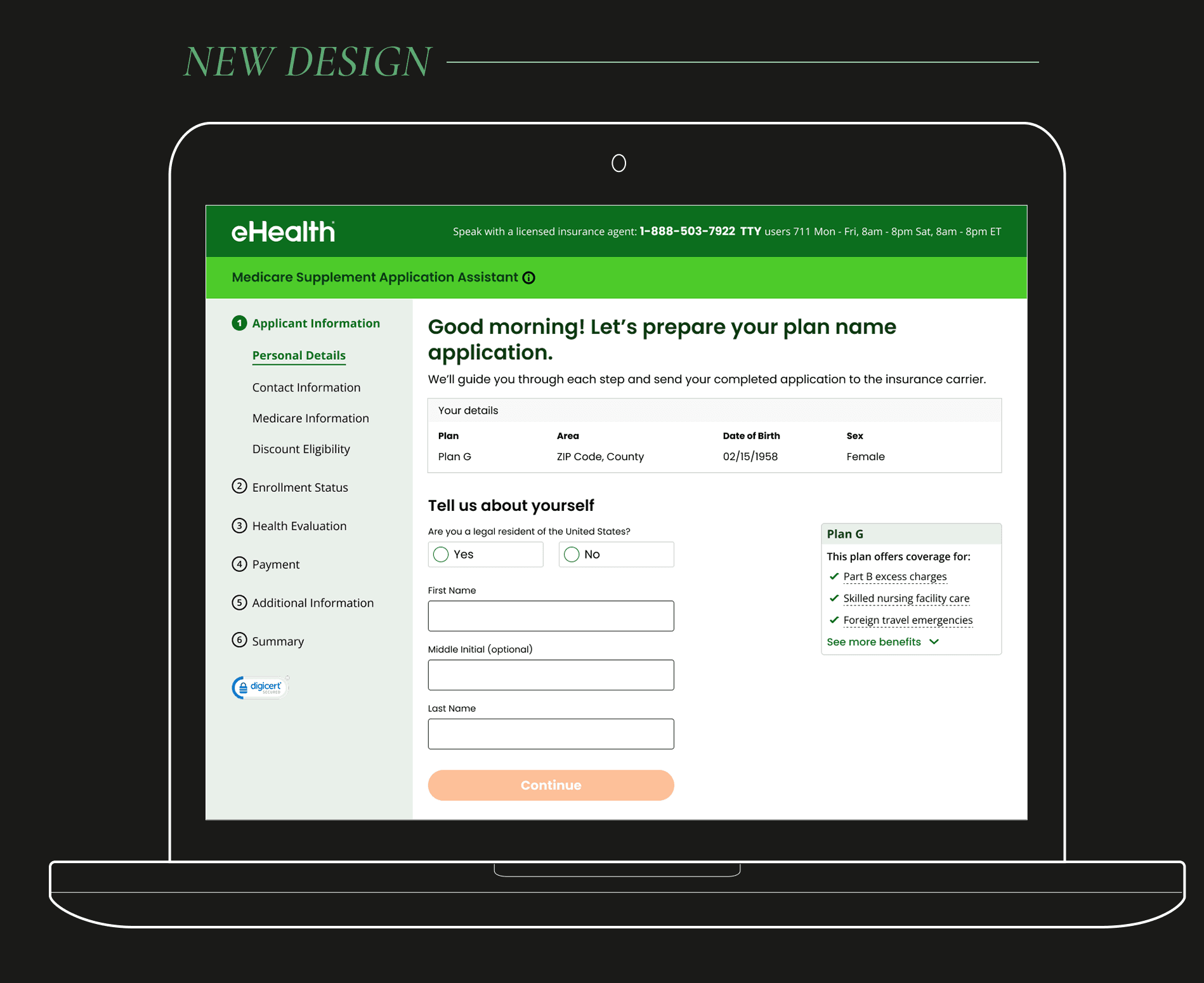
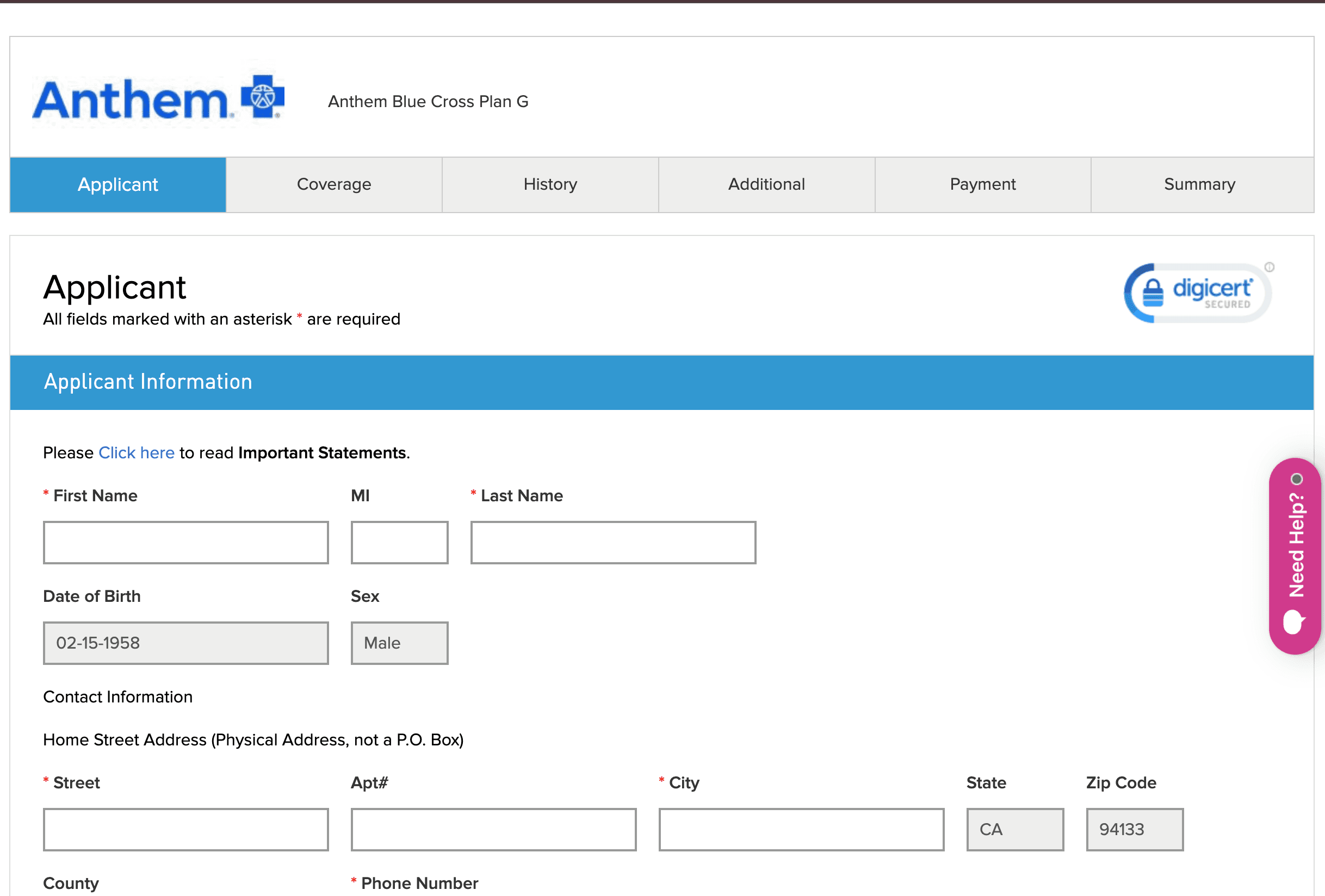
The current enrollment experience was built on Castro — a legacy system that was difficult to navigate, rigid, and not intuitive for users. Its limited flexibility made it nearly impossible to support carrier-specific questions, resulting in a fragmented enrollment experience and increased cognitive load for users completing one of the most consequential financial forms of their lives.
Carriers like Humana, Aetna, Anthem, and UnitedHealthcare each have distinct underwriting rules, eligibility questions, and compliance requirements. Castro could not adapt — forcing users through irrelevant questions and agents into manual workarounds.
The current enrollment experience was built on Castro - a legacy system that was difficult to navigate, rigid, and not intuitive for users. Its limited flexibility made it nearly impossible to support carrier-specific questions, resulting in a fragmented enrollment experience and increased cognitive load for users completing one of the most consequential financial forms of their lives.
Carriers like Humana, Aetna, Anthem, and UnitedHealthcare each have distinct underwriting rules, eligibility questions, and compliance requirements. Castro could not adapt - forcing users through irrelevant questions and agents into manual workarounds.
The current enrollment experience was built on Castro - a legacy system that was difficult to navigate, rigid, and not intuitive for users. Its limited flexibility made it nearly impossible to support carrier-specific questions, resulting in a fragmented enrollment experience and increased cognitive load for users completing one of the most consequential financial forms of their lives.
Carriers like Humana, Aetna, Anthem, and UnitedHealthcare each have distinct underwriting rules, eligibility questions, and compliance requirements. Castro could not adapt - forcing users through irrelevant questions and agents into manual workarounds.
03 RESEARCH & DISCOVERY
What success looked like
01
Reduce Cognitive Load
Surface only the questions relevant to each user's carrier, plan, and eligibility status — nothing more.
02
Support Carrier-Specific Requirements
Enable a single unified flow that dynamically adapts to each carrier's underwriting and compliance rules.
03
Increase User Confidence
Help users understand what's required and why, so they move through enrollment with trust rather than anxiety.
04
Enable Scalable Compliance
Design a system architecture flexible enough to onboard new carriers without redesigning the experience each time.
PROBLEM
RESEARCH
Studying the carriers before designing the flow
Studying the carriers before designing the flow
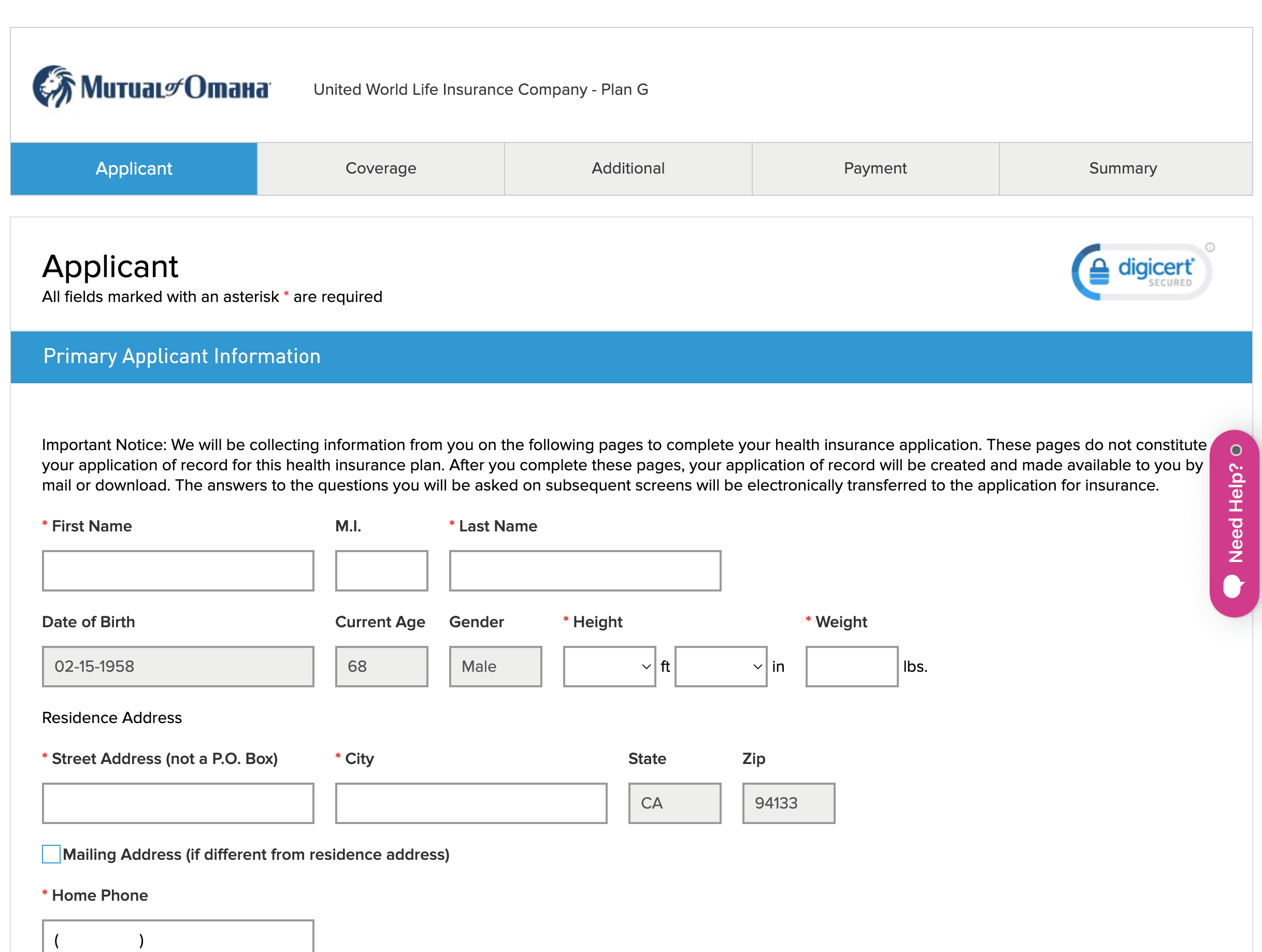
I examined enrollment flows across Humana, Aetna, Anthem, and UnitedHealthcare to identify shared questions and carrier-specific requirements. This informed the creation of a unified application architecture that could flex without fracturing the user experience.
Early sketches were reviewed with stakeholders and compliance partners. User testing was then conducted on those sketches to validate the flow structure before moving into hi-fi design.
Examined enrollment flows across Humana, Aetna, Anthem, and UnitedHealthcare to identify shared questions and carrier-specific requirements. This informed the creation of a unified application architecture that could flex without fracturing the user experience.
Early sketches were reviewed with stakeholders and compliance partners. User testing was then conducted on those sketches to validate the flow structure before moving into hi-fi design.
Examined enrollment flows across Humana, Aetna, Anthem, and UnitedHealthcare to identify shared questions and carrier-specific requirements. This informed the creation of a unified application architecture that could flex without fracturing the user experience.
Early sketches were reviewed with stakeholders and compliance partners. User testing was then conducted on those sketches to validate the flow structure before moving into hi-fi design.
05 Insights & Problem Framing
What the research revealed
01
Complexity is real — but most of it is invisible to users
Carrier-specific rules (guaranteed issue, underwriting, household discounts) are genuinely complex, but users don't need to understand the rules — they just need to be guided through their slice of them.
02
Irrelevant questions erode trust
When users encounter questions that don't apply to their situation, they lose confidence in the process and become more likely to abandon or call an agent for help.
03
High-stakes forms need visible guidance
In a regulated enrollment context, hiding help text increases anxiety. Users need to see why a question is being asked, especially around health and eligibility.
04
Agents needed a flow they could trust too
Agents were compensating for the old system's rigidity with manual workarounds. A cleaner flow would benefit users and agents equally.
How Might We: "How might we build a single enrollment experience that feels simple and personal — even when the underlying carrier requirements are radically different?"
How Might We: "How might we build a single enrollment experience that feels simple and personal — even when the underlying carrier requirements are radically different?"
RESEARCH
DESIGN PRINCIPALS
Four principles that guided every decision.
Four principles that guided every decision.
Principle 01
Clarity over complexity
Break down regulatory and underwriting requirements into clear, understandable steps. No legal speak. No surprises.
Principle 02
Progressive disclosure
Surface health, eligibility, and additional questions only when required - reducing cognitive load at each step
Principle 04
Confidence through transparance
Clearly communicate what's required and why -helping users move forward with trust rather than uncertainty.
Principle 03
Consistency with flexibility
Standardize the experience across carriers while adapting dynamically to carrier-specific rules under the hood.
Principle 01
Clarity over complexity
Clarity over complexity
Break down regulatory and underwriting requirements into clear, understandable steps. No legal speak. No surprises.
Principle 02
Progressive disclosure
Progressive disclosure
Surface health, eligibility, and additional questions only when required - reducing cognitive load at each step
Principle 03
Consistency with flexibility
Consistency with flexibility
Standardize the experience across carriers while adapting dynamically to carrier-specific rules under the hood.
Principle 04
Confidence through transparance
Clearly communicate what's required and why -helping users move forward with trust rather than uncertainty.
DESIGN PRINCIPALS
WORKFLOW
Four principles that guided every decision.
One flow. Every carrier.
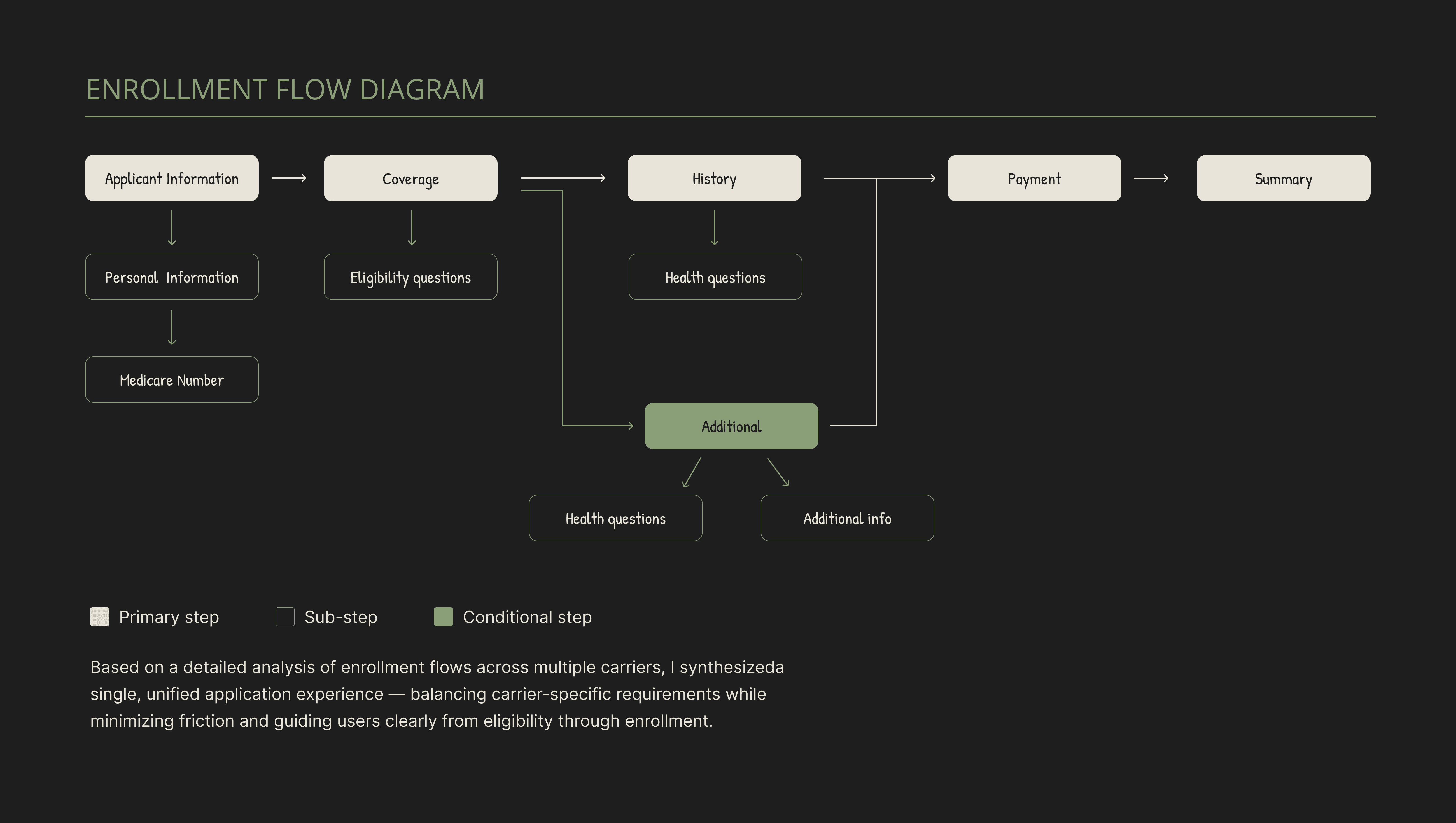
I synthesized enrollment requirements across multiple carriers into a single unified application architecture that branches intelligently based on eligibility and carrier rules.
I synthesized enrollment requirements across multiple carriers into a single unified application architecture that branches intelligently based on eligibility and carrier rules.
WORKFLOW
COPY
One flow. Every carrier.
Copy that guides, not intimidates.
I synthesized enrollment requirements across multiple carriers into a single unified application architecture that branches intelligently based on eligibility and carrier rules.
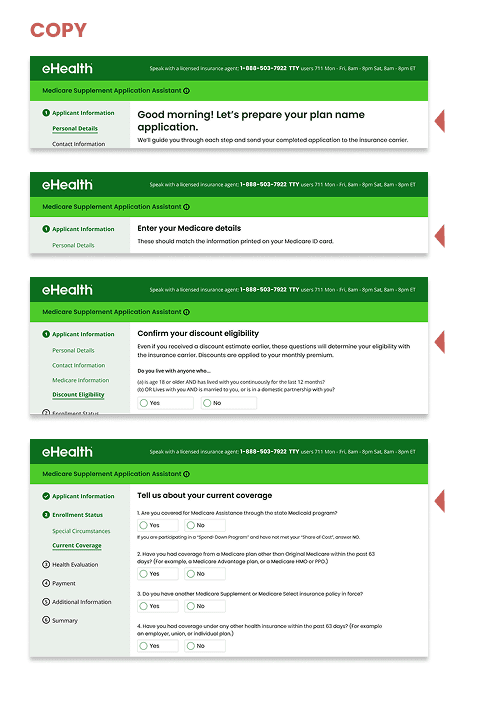
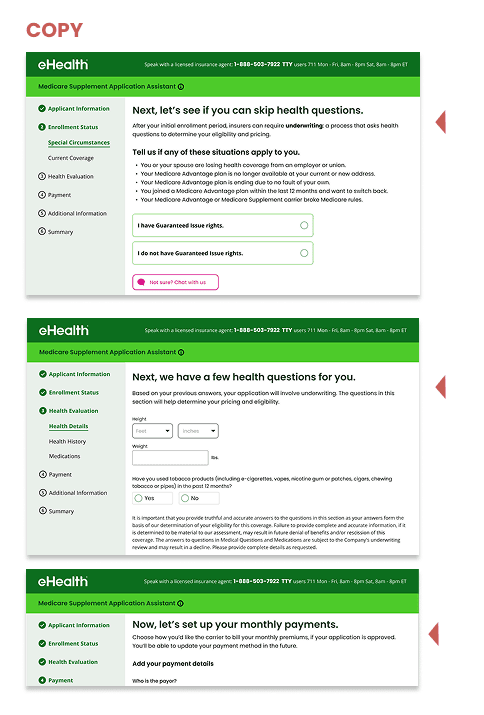
Collaborated with content design and research to develop and test clear, user-centered copy for a regulated enrollment experience.
DESIGN PRINCIPALS
COPY
One flow. Every carrier.
Copy that guides, not intimidates.
I synthesized enrollment requirements across multiple carriers into a single unified application architecture that branches intelligently based on eligibility and carrier rules.
Collaborated with content design and research to develop and test clear, user-centered copy for a regulated enrollment experience.
07 USER FLOW & INFORMATIONAL ARCHITECTURE
One flow. Every carrier.
I synthesized enrollment requirements across multiple carriers into a single unified application architecture that branches intelligently based on eligibility and carrier rules.
The key architectural decision was the guaranteed issue branch. If a user is in their guaranteed issue period, health underwriting questions are bypassed entirely — reducing the form significantly and removing unnecessary anxiety. If underwriting is required, health history and health questions are surfaced progressively, only after the user understands why.
The result: a single flow that handles Applicant Information → Coverage → Eligibility → (conditional: Health History + Health Questions) → Additional → Payment → Summary — for every carrier, without fracturing the experience.




Four content principles
Four content principles
Four content principle
Clear, Friendly, Human
Clear, Friendly, Human
Plain language throughout. Each section explains what's needed and why — no legal speak, no surprises.
Consistency builds confidence
Consistency builds confidence
Clear titles, predictable structure, and supportive copy reduce cognitive load and keep users moving.
Educate, Don't hide
Educate, Don't hide
All guidance is visible by default. In a high-stakes flow, hiding information increases uncertainty. Keeping copy visible ensures users feel informed and avoid mistakes.
Progressive, Not overwhelming
Progressive, Not overwhelming
Information is concise, scannable, and broken into manageable steps — supporting steady progress without overload.
COPY
DESIGN EXPLORATION
Copy that guides, not intimidates.
Sketch early, validate often.
Collaborated with content design and research to develop and test clear, user-centered copy for a regulated enrollment experience.
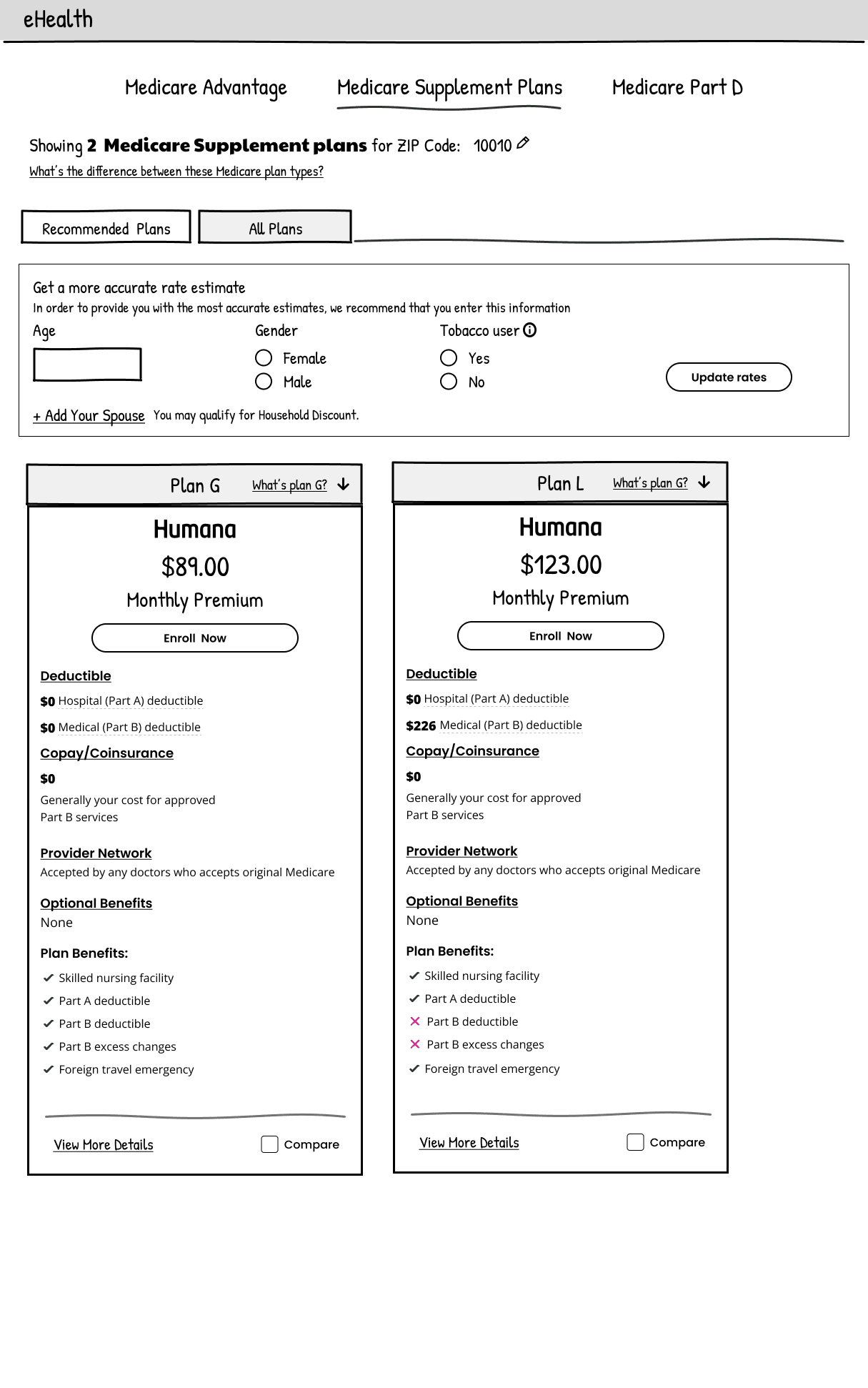
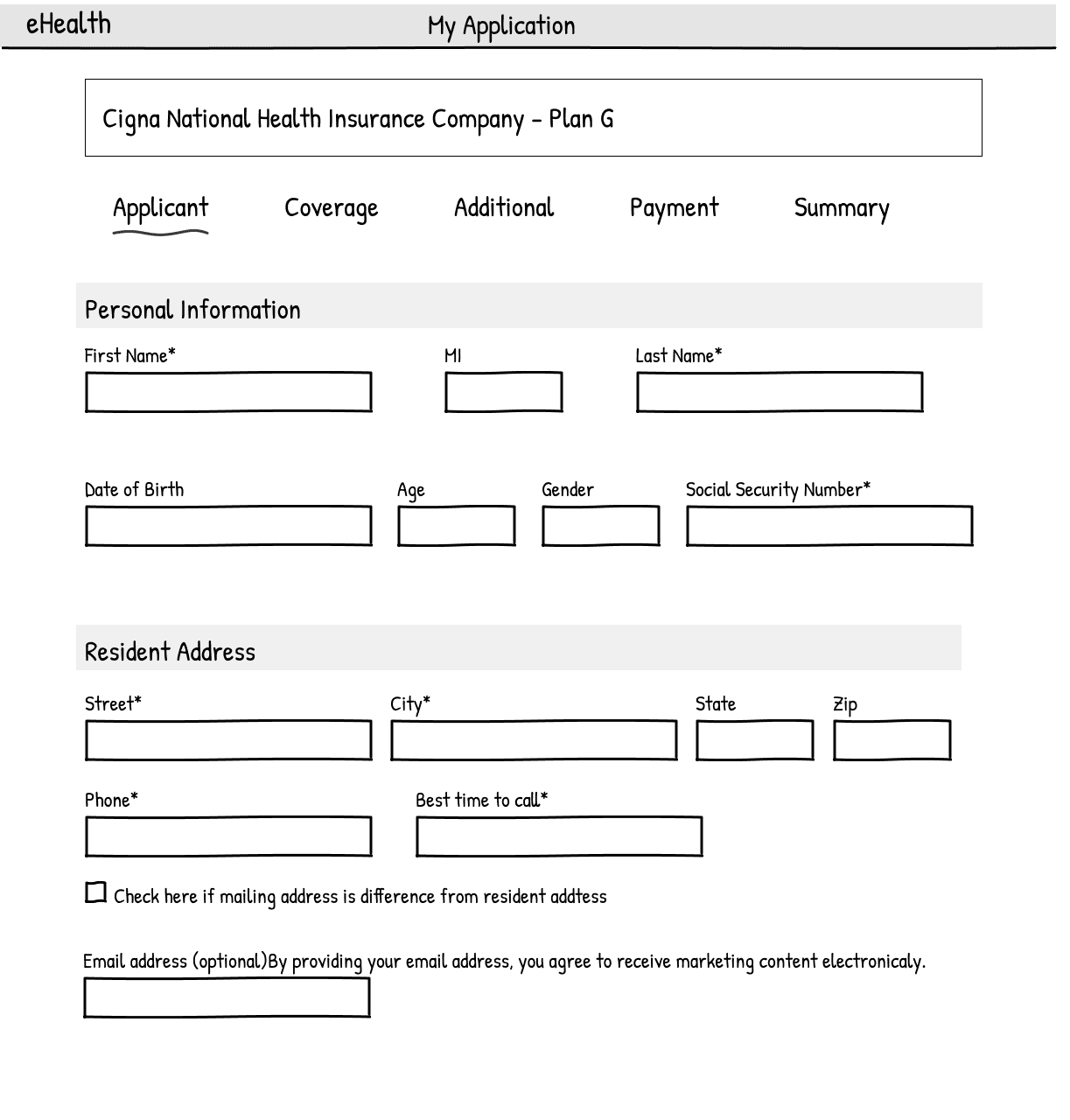
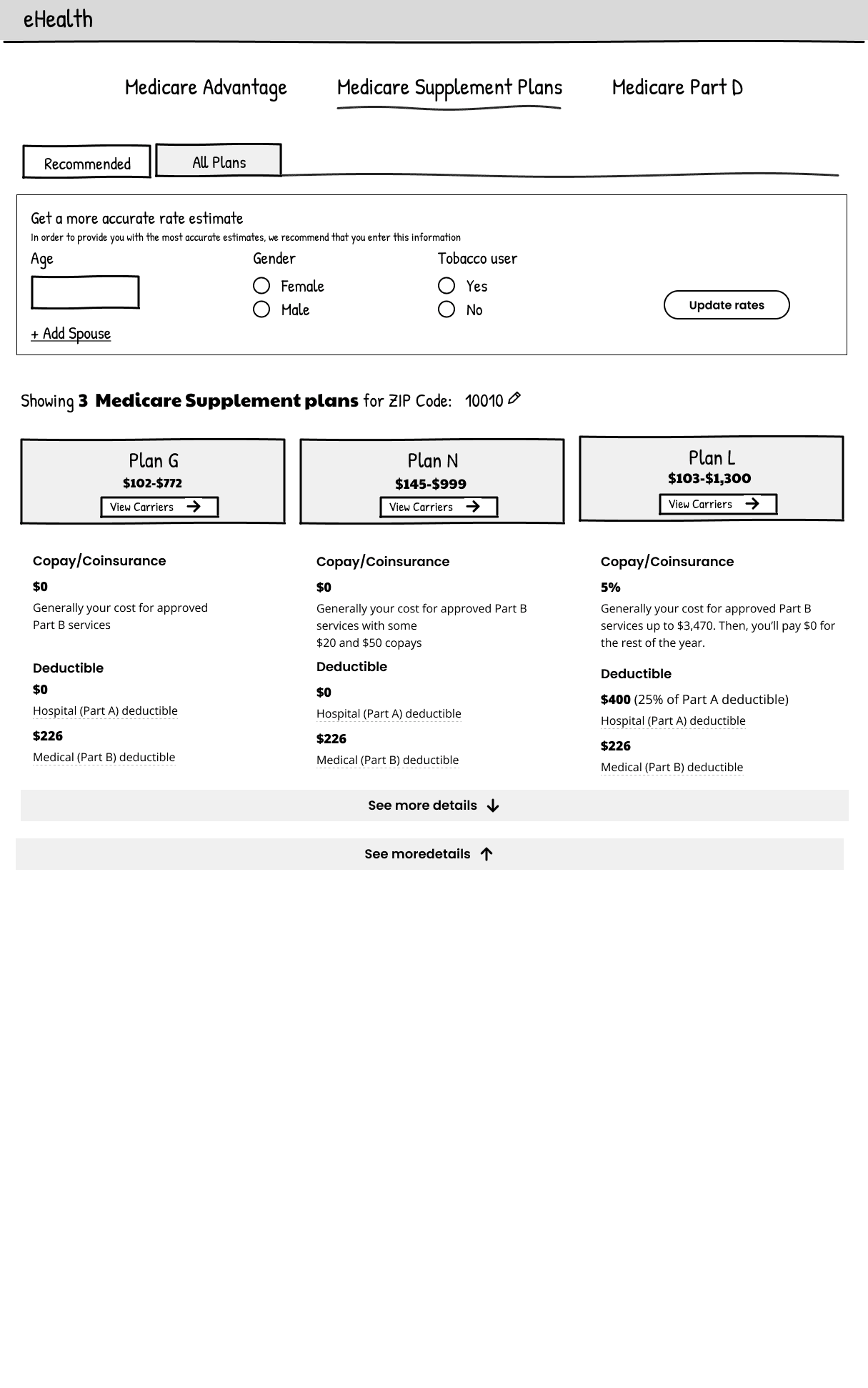
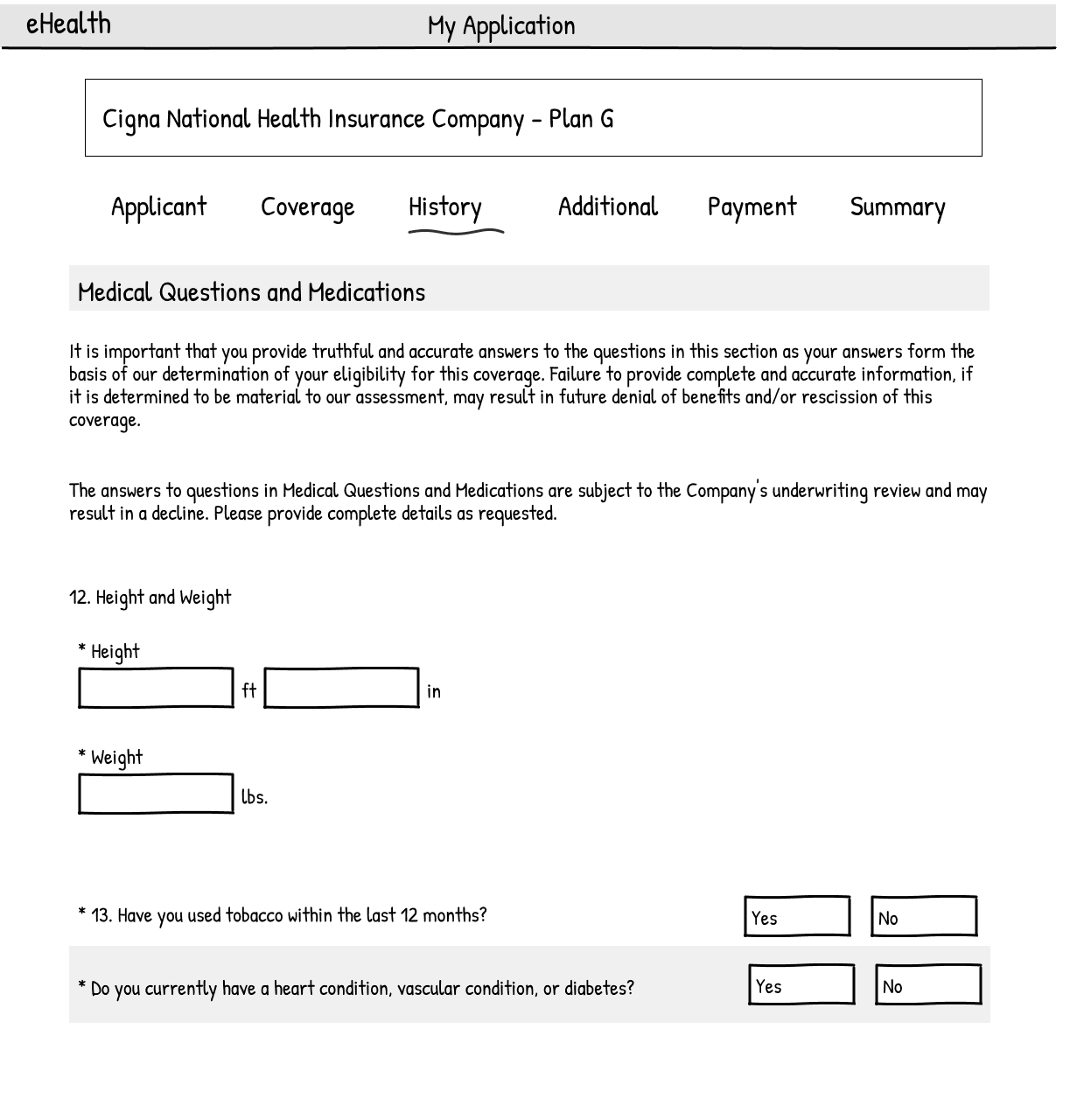
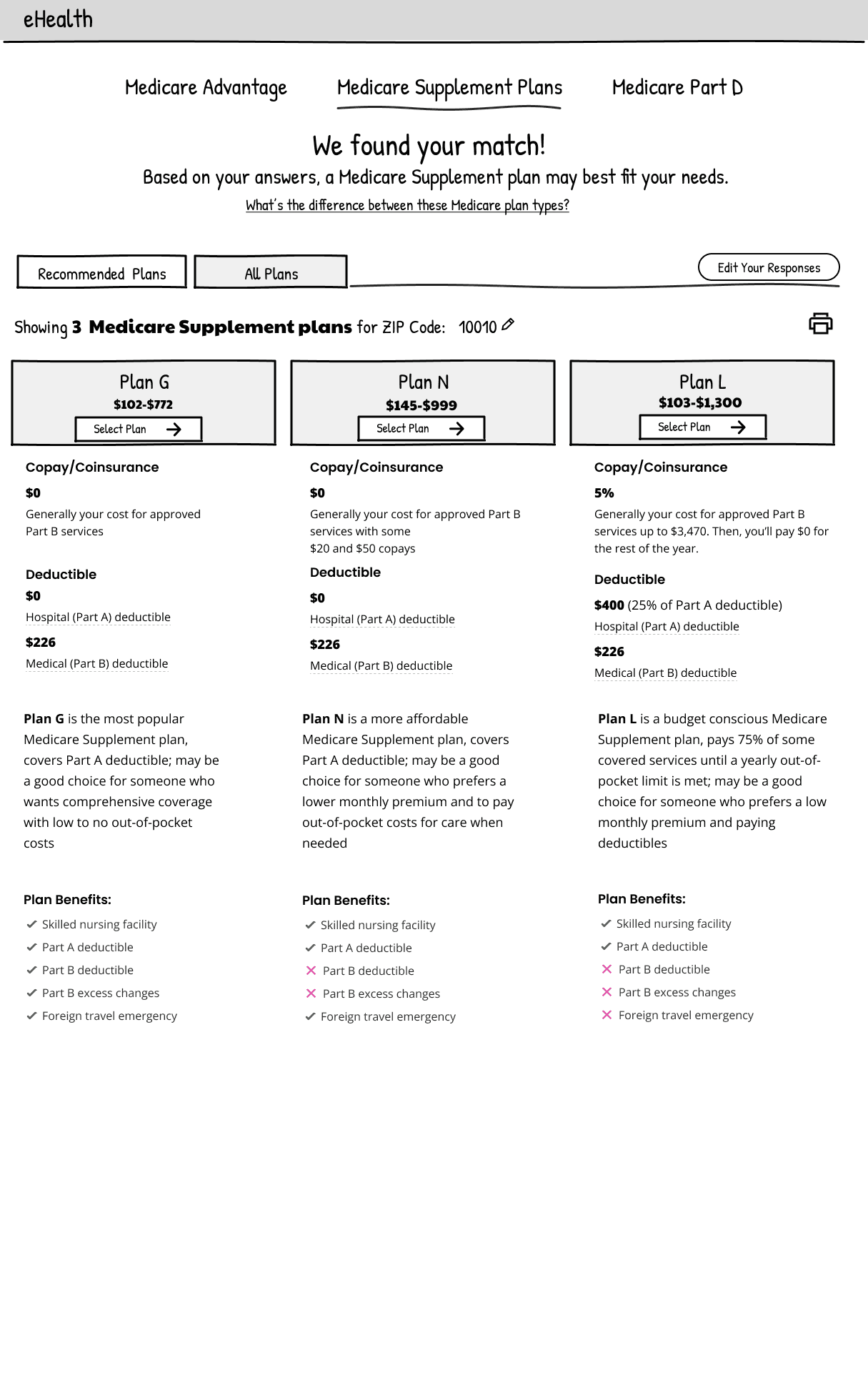
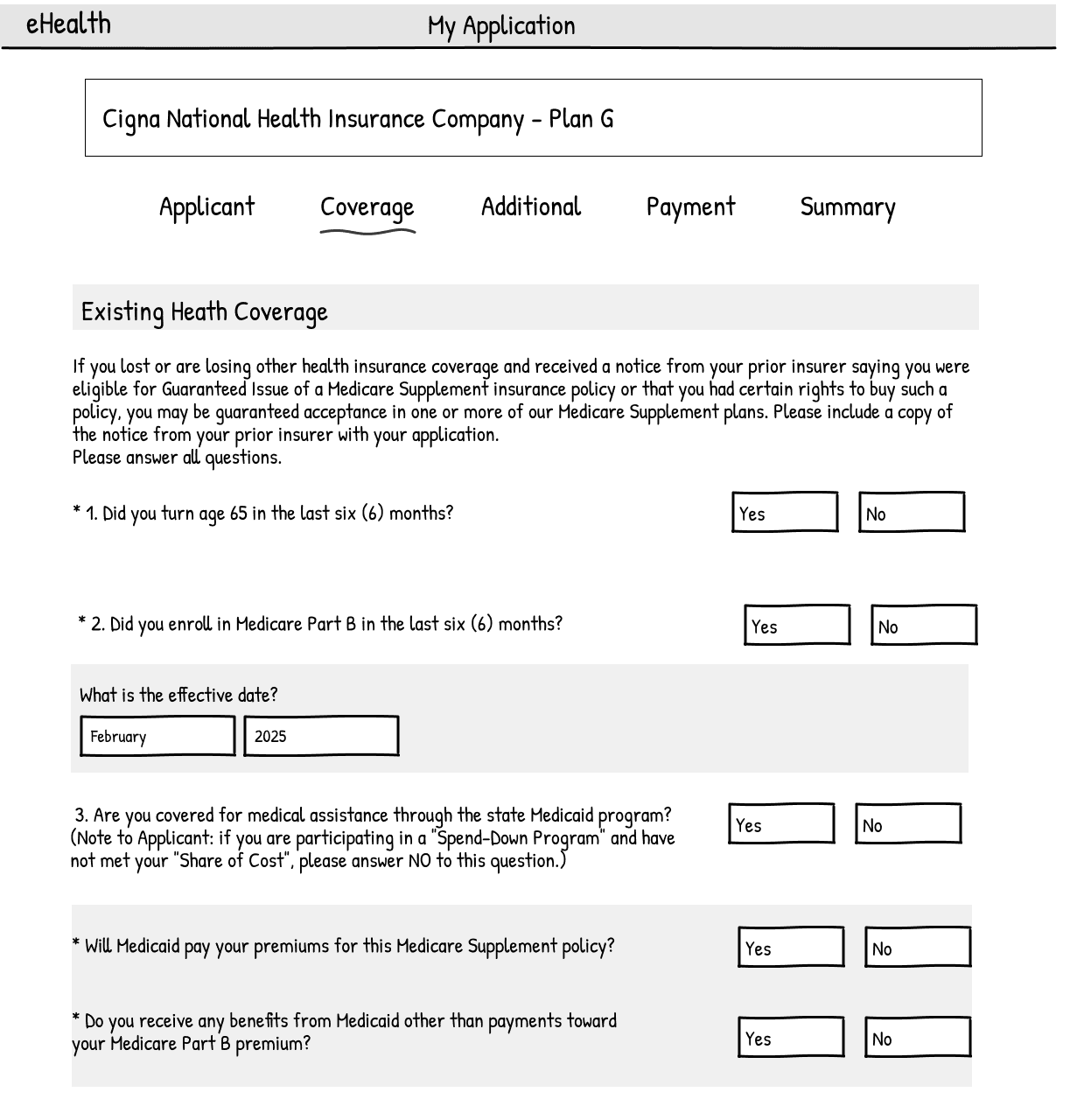
Early sketches were created to review with stakeholders and compliance partners before any visual design began. These were low-fidelity enough to invite feedback, but structured enough to represent real flow decisions. User testing on these sketches validated the step structure and revealed where guidance copy was most critical.
DESIGN EXPLORATION
Sketch early, validate often.
Early sketches were created to review with stakeholders and compliance partners before any visual design began. These were low-fidelity enough to invite feedback, but structured enough to represent real flow decisions. User testing on these sketches validated the step structure and revealed where guidance copy was most critical.
06 TESTING & VALIDATION
COPY
TESTING & VALIDATION
TESTING & VALIDATION
Sketch early, validate often.
Tested early. Iterated continuously.
Tested early. Iterated continuously.
User testing was conducted across multiple rounds — starting with sketches, continuing through mid-fidelity wireframes, and concluding with hi-fi prototypes. Testing focused on three areas: step comprehension (do users understand what's being asked and why?), flow navigation (do users know where they are and what comes next?), and copy clarity (does the language build or erode confidence?).
User testing was conducted across multiple rounds — starting with sketches, continuing through mid-fidelity wireframes, and concluding with hi-fi prototypes. Testing focused on three areas:
Step comprehension (do users understand what's being asked and why?),
Flow navigation (do users know where they are and what comes next?)
Copy clarity (does the language build or erode confidence?).
TESTING & VALIDATION
Tested early. Iterated continuously.
User testing was conducted across multiple rounds — starting with sketches, continuing through mid-fidelity wireframes, and concluding with hi-fi prototypes. Testing focused on three areas:
Step comprehension (do users understand what's being asked and why?),
Flow navigation (do users know where they are and what comes next?)
Copy clarity (does the language build or erode confidence?).
FINAL SOLUTION
Tested early. Iterated continously.
A guided journey that adapts to every carrier.


RESULTS & IMPACT
RESULTS & IMPACT
A measurably clearer, more confident experience.
The redesigned flow launched on Muse 4, replacing the Castro legacy system across all Medicare Supplement carriers. The new architecture supports dynamic carrier configuration without requiring design changes for each new carrier onboard.
Drop-off
Reduced form abandonment during health evaluation sections through progressive disclosures and contextual guidance
Confidence
Users reported higher confidence navigation the flow, particularly around health and eligibility questions
Scalable
New carriers can be onboarded via backend configuration without redesigning or re-engineering the UI
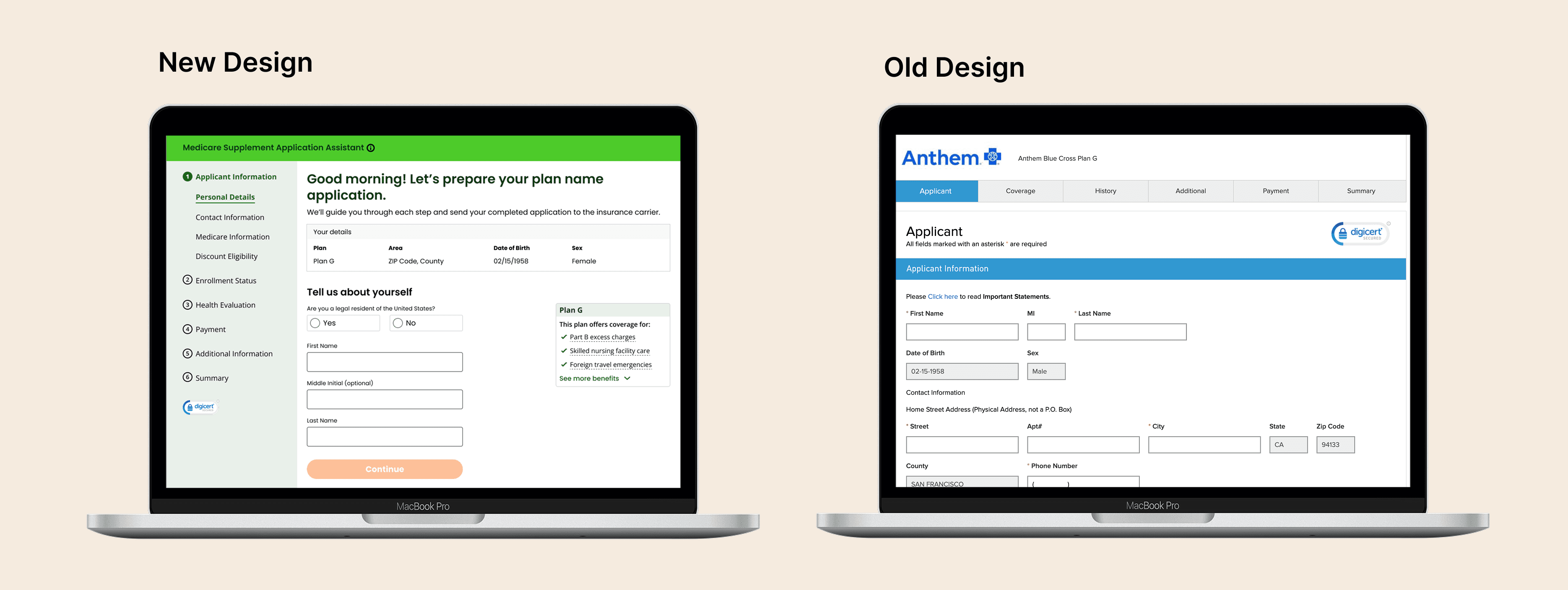
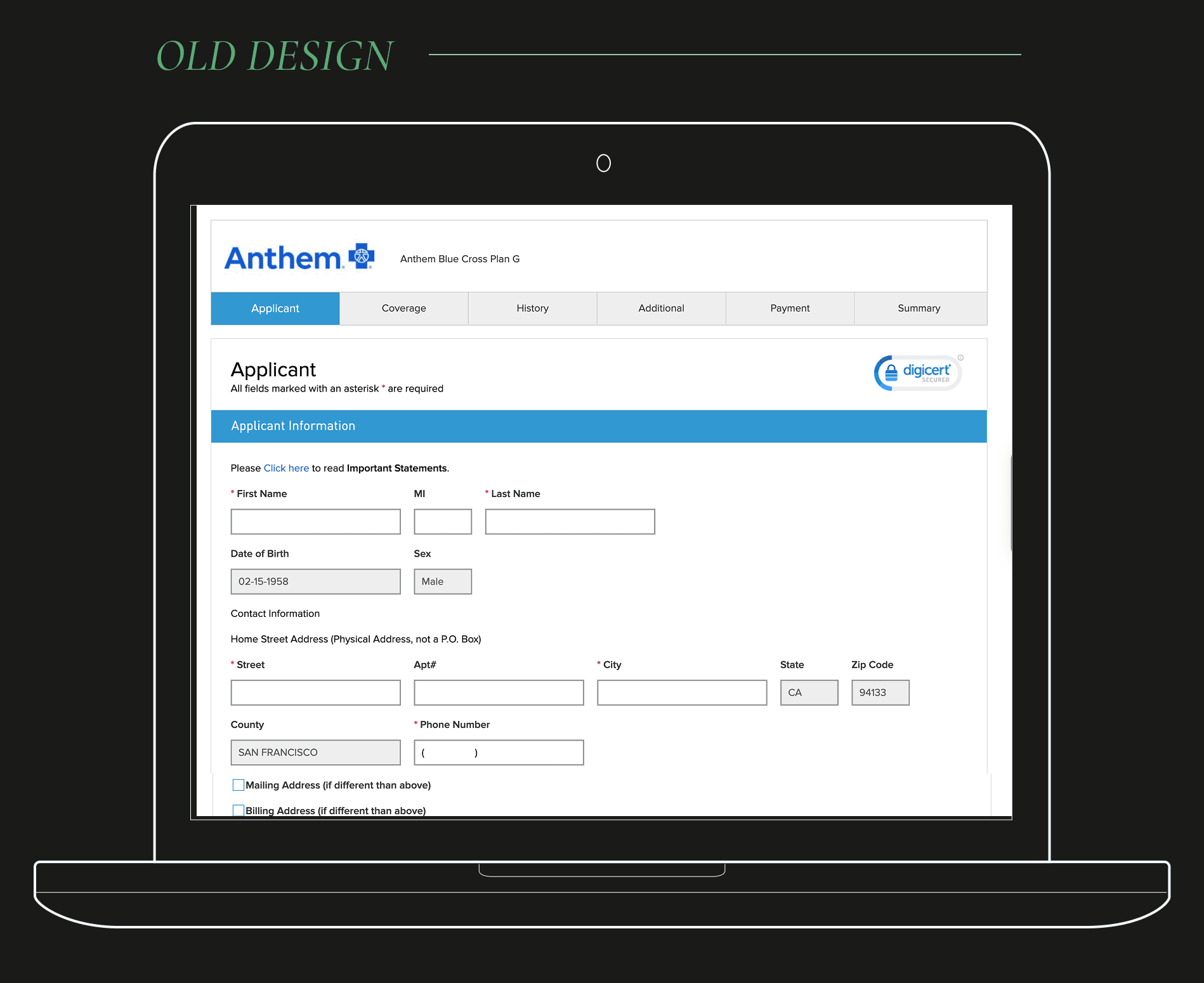
The redesigned enrollment experience on Muse v4 — clear, progressive, and carrier-aware.
The redesigned enrollment experience on Muse v4 — clear, progressive, and carrier-aware.
Key design decisions.
Stepper navigation
A persistent left-rail stepper gives users a clear sense of progress and orientation across all sections — Applicant Information, Enrollment Status, Health Evaluation, Payment, Additional Information, Summary.
Contextual plan summary
The user's selected plan and key benefits are shown inline during enrollment, reducing back-and-forth and supporting informed decision-making.
Progressive disclosure of health questions
Health evaluation sections are surfaced only when the user's eligibility status requires underwriting — with clear explanation of why before the questions appear.
Carrier-aware content
Carrier-specific requirements are handled in the backend configuration, not the UI — keeping the experience consistent for users regardless of which carrier they're enrolling with.
08 RESULTS & IMPACT
A measurably clearer, more confident experience
The redesigned flow launched on Muse 4, replacing the Castro legacy system across all Medicare Supplement carriers. The new architecture supports dynamic carrier configuration without requiring design changes for each new carrier onboard.
The stepper navigation and inline plan summary were called out particularly in usually texting as features that made the experince feel "trustworthy" and "organized". Agents reported fewer manual workrounds required after launch
Drop-off
Reduced form abandonment during health evaluation sections through progressive disclosures and contextual guidance
Confidence
Users reported higher confidence navigation the flow, particularly around health and eligibility questions
Scalable
New carriers can be onboarded via backend configuration without redesigning or re-engineering the UI
09 NEXT STEP & FUTURE OPPORTUNITIES
Where this goes from here
Expand Carrier Coverage
Onboard additional carriers into the Muse v4 architecture, validating that the configuration model scales without UX regression.
Post-Launch Measurement
Instrument completion rate, time-on-task, and agent-assist rate across the new flow to quantify impact and identify remaining friction points.
Accessibility Audit
Medicare Supplement users skew older — a comprehensive accessibility review of the final flow against WCAG 2.1 AA is a high-priority next step.
FINAL SOLUTION
A guided journey that adapts to every carrier.
RESULTS & IMPACT
A measurably clearer, more confident experience.
The redesigned flow launched on Muse 4, replacing the Castro legacy system across all Medicare Supplement carriers. The new architecture supports dynamic carrier configuration without requiring design changes for each new carrier onboard.
Drop-off
Reduced form abandonment during health evaluation sections through progressive disclosures and contextual guidance
Confidence
Users reported higher confidence navigation the flow, particularly around health and eligibility questions
Scalable
New carriers can be onboarded via backend configuration without redesigning or re-engineering the UI.
07 FINALE SOLUTION
A guided journey that adapts to every carrier
The redesigned enrollment experience on Muse v4 — clear, progressive, and carrier-aware.
Key design decisions.
Stepper navigation
A persistent left-rail stepper gives users a clear sense of progress and orientation across all sections — Applicant Information, Enrollment Status, Health Evaluation, Payment, Additional Information, Summary.
Contextual plan summary
The user's selected plan and key benefits are shown inline during enrollment, reducing back-and-forth and supporting informed decision-making.
Progressive disclosure of health questions
Health evaluation sections are surfaced only when the user's eligibility status requires underwriting — with clear explanation of why before the questions appear.
Carrier-aware content
Carrier-specific requirements are handled in the backend configuration, not the UI — keeping the experience consistent for users regardless of which carrier they're enrolling with.
Key design decisions.
Stepper navigation
A persistent left-rail stepper gives users a clear sense of progress and orientation across all sections — Applicant Information, Enrollment Status, Health Evaluation, Payment, Additional Information, Summary.
Contextual plan summary
The user's selected plan and key benefits are shown inline during enrollment, reducing back-and-forth and supporting informed decision-making.
Progressive disclosure of health questions
Health evaluation sections are surfaced only when the user's eligibility status requires underwriting — with clear explanation of why before the questions appear.
Carrier-aware content
Carrier-specific requirements are handled in the backend configuration, not the UI — keeping the experience consistent for users regardless of which carrier they're enrolling with.
06 TESTING & VALIDATION
Tested early. Iterated continuously.
User testing was conducted across multiple rounds — starting with sketches, continuing through mid-fidelity wireframes, and concluding with hi-fi prototypes. Testing focused on three areas: step comprehension (do users understand what's being asked and why?), flow navigation (do users know where they are and what comes next?), and copy clarity (does the language build or erode confidence?).
08 RESULTS & IMPACT
A measurably clearer, more confident experience
The redesigned flow launched on Muse 4, replacing the Castro legacy system across all Medicare Supplement carriers. The new architecture supports dynamic carrier configuration without requiring design changes for each new carrier onboard.
The stepper navigation and inline plan summary were called out particularly in usually texting as features that made the experince feel "trustworthy" and "organized". Agents reported fewer manual workrounds required after launch
Drop-off
Reduced form abandonment during health evaluation sections through progressive disclosures and contextual guidance
Confidence
Confidence
Users reported higher confidence navigation the flow, particularly around health and eligibility questions
Scalable
Scalable
New carriers can be onboarded via backend configuration without redesigning or re-engineering the UI
Drop-off
Reduced form abandonment during health evaluation sections through progressive disclosures and contextual guidance
Confidence
Users reported higher confidence navigation the flow, particularly around health and eligibility questions
Scalable
New carriers can be onboarded via backend configuration without redesigning or re-engineering the UI
09 NEXT STEP & FUTURE OPPORTUNITIES