CASE STUDY
EHEALTH INSURANCE
Med Supp Plan Cards — designing decisions, not just displays.
Redesigning the Medicare Supplement flow to turn a confusing comparison table into a confident, streamlined shopping experience.
ROLE
Lead Designer
TIMELINE
Q1–Q2 2025
PLATFORM
Mobile
TEAM
PM, Developers, Research, Stake holders
OVERVIEW
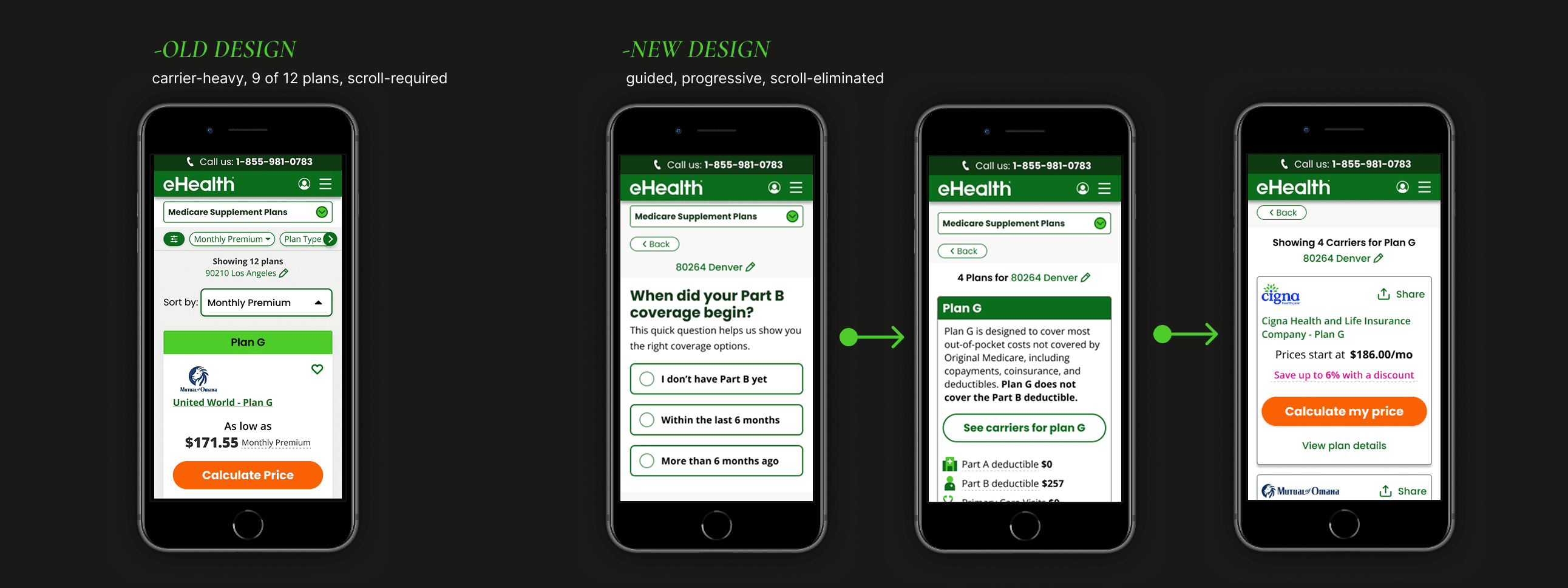
Decrease scrolling, increase MS understanding.
eHealth's Medicare Supplement (Medigap) plan shopping page was cluttered, carrier-first, and hard to navigate when 6 or more carriers appeared per plan type. Users couldn't easily compare plans or understand what they were actually choosing before being asked to commit.
This was a round of user testing on a redesigned plan card system — focused specifically on mobile. The goal: find a flow that would allow users to learn about different types of plans available in their area and select a carrier based on their personal data.
PROBLEM STATEMENT
The existing experience asked users to commit before they understood.
Medicare Supplement is one of the most complex insurance decisions a person can make. Yet eHealth's mobile shopping flow was designed carrier-first — surfacing 6+ carriers per plan type without giving users a clear way to understand what made each plan different.
Users were expected to compare dense rows of coverage data, evaluate pricing across carriers, and ultimately make a high-stakes financial decision — all on a small screen, without sufficient context.
USER IMPACT
Confusion at the point of choice
Too many options presented simultaneously without sufficient context led to decision fatigue and drop-off before quote completion.
BUSINESS IMPACT
Lost quote starts and conversions
When users couldn't confidently evaluate plans, they abandoned the flow — costing eHealth meaningful revenue and leaving users without coverage.
GOALS & SUCCESS METRICS
What winning looked like.
The redesign had two complementary aims: make it genuinely easier for users to understand their Medicare Supplement options, and reduce the friction that was causing them to exit the funnel before reaching a quote.
Reduce Scroll Depth
Users should be able to evaluate plans without endless scrolling through carrier rows
Increase Plan Comprehension
Users should be able to articulate the difference between Plan types before selecting a carrier.
Quote Start Rate
More users completing the flow to a quote request, measured against the existing baseline.
USER FLOWS & INFORMATIONAL ARCHITECTURE
Mapping the journey from confusion to commitment.
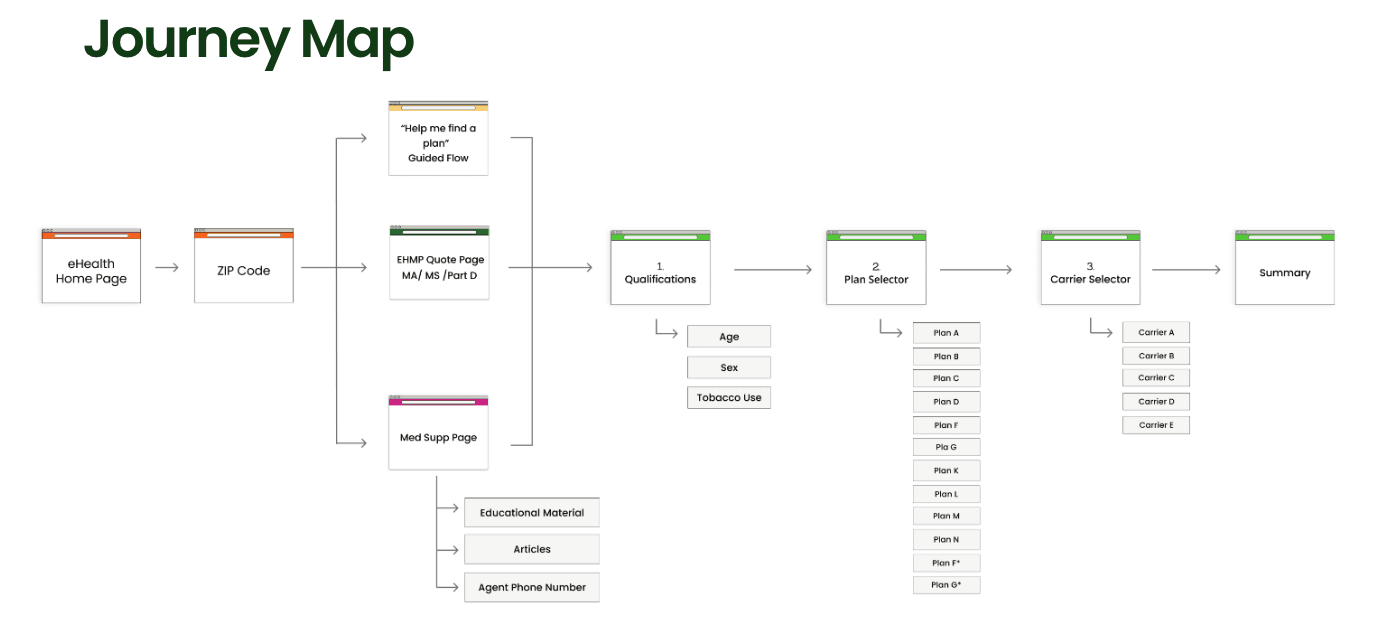
The journey map was a critical artifact in this project — making visible the full sequence a user moves through from landing on the eHealth home page to reaching a plan summary. It also revealed where the existing flow was skipping steps users actually needed.
The mapped flow included: eHealth Home Page → ZIP Code → eHealth Guide Page / Med Supp Page → Qualifications (Age, Sex, Tobacco Use) → Plan Selector → Carrier Selector → Summary.
A key structural decision was separating the Plan Selector step from the Carrier Selector. Previously these were collapsed — users were immediately confronted with carriers without ever explicitly choosing a plan type. Separating them gave the system a logical gate: understand the plan before choosing who sells it.
WIREFRAMES